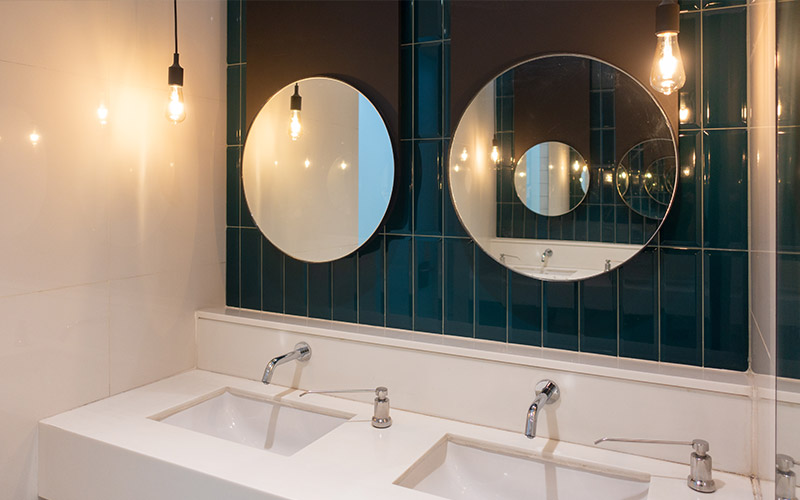
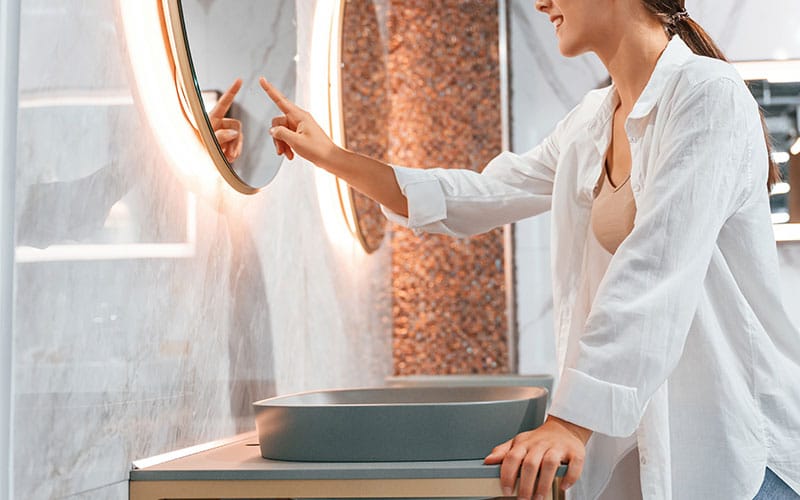
From Single-Function to Interactive Hub, Smart Mirrors are Reshaping the Aesthetics and Experience of Modern Home Living.
With the rapid development of global Internet of Things (IoT) technology, home spaces are undergoing an unprecedented intelligent revolution. Mirrors, as a core item in bathrooms and entryways, are no longer merely tools for grooming, but are gradually evolving into the “fourth screen” of smart homes. Industry data shows that the global smart mirror market is expanding at an astonishing rate, and its target audience has expanded from high-end hotels and commercial complexes to ordinary households.
Currently, full-area anti-fogging, stepless dimming, and voice interaction have become core technological features of smart mirrors. Anti-fogging technology solves the usage problems in bathroom environments, while the dimming function meets users’ lighting needs in different scenarios such as makeup and washing. More importantly, modern smart mirrors can now perfectly integrate with mainstream smart home ecosystems, allowing users to control lighting, water temperature, and even check the weather and news through the mirror surface. This improvement in technological maturity and stability is driving the industry towards a deeper integration of art and technology.
Furthermore, design aesthetics are equally crucial in the smart mirror field. Exquisite craftsmanship such as carving and laser engraving cleverly combines modern design with traditional elements, giving the products high artistic value. In the future, with the surge in demand for personalized customization, flexible production capabilities that can accurately match different market styles and consumer preferences will become a key factor for mirror companies to stand out in international competition and seize niche markets.